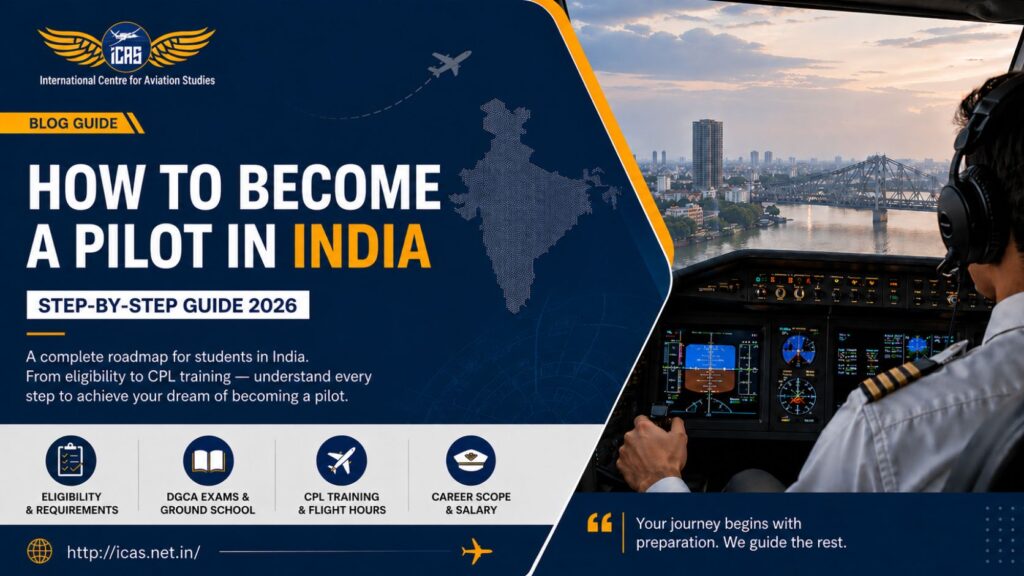
For many students across India, becoming a pilot feels like an exciting but complicated goal. There is often confusion around eligibility, DGCA exams, training steps, and how to actually get started.
The process is structured, but only if you follow the right sequence.
This guide explains how to become a pilot in India, with a clear step-by-step roadmap based on current DGCA requirements and the pathway followed by most aspiring commercial pilots.
Who Can Become a Pilot? (Eligibility)
To begin your journey, you must meet the requirements set by the Directorate General of Civil Aviation (DGCA).
Basic Eligibility
| Requirement | Details |
|---|---|
| Age | Minimum 17 years to begin training |
| CPL Requirement | Minimum 18 years for Commercial Pilot Licence (CPL) |
| Education | 10+2 with Physics and Mathematics |
| Alternative Path | Students without PCM can complete it separately |
| Medical Fitness | Class 2 Medical to start with |
| CPL Medical Requirement | Class 1 Medical before CPL |
| Language | English proficiency is required for communication and exams |
It is always better to complete your medicals early so that there are no delays later.
Step-by-Step Process to Become a Pilot in West Bengal
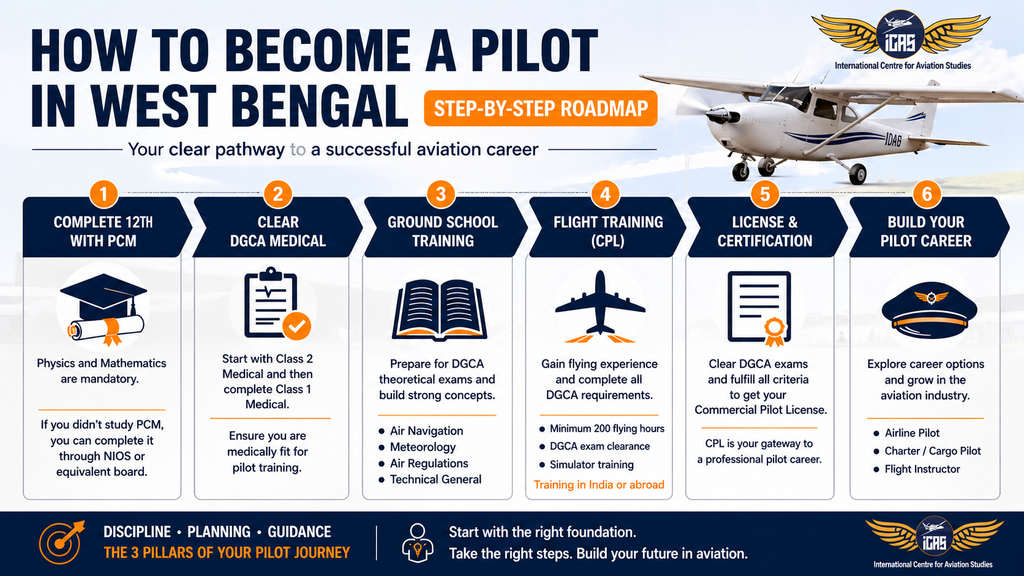
If you are looking for the steps to become a pilot in India, this is the exact pathway followed by most students.
Step 1: Complete 12th with PCM
Physics and Mathematics are mandatory for pilot training.
If you did not study PCM:
- You can complete it through NIOS or an equivalent board.
Step 2: Clear DGCA Medical
Before moving ahead, you need to be medically fit.
- Start with Class 2 Medical
- Then complete Class 1 Medical
This step ensures you are eligible for further training.
Step 3: Ground School Training
Ground school is where you prepare for DGCA theoretical exams and build your understanding of aviation.
Subjects include:
- Air Navigation
- Meteorology
- Air Regulations
- Technical General
A structured approach at this stage helps reduce confusion and improves exam performance.
🔗 Read More About Pilot Ground School Fees in India
Step 4: Flight Training (CPL)
After building your theoretical base, you move on to flying.
To obtain a Commercial Pilot Licence, you need:
- Minimum 200 flying hours
- DGCA exam clearance
- Simulator training
You can complete your flight training either in India or abroad depending on your preference.
🔗 Learn more about CPL Training Program
Career Scope and Salary
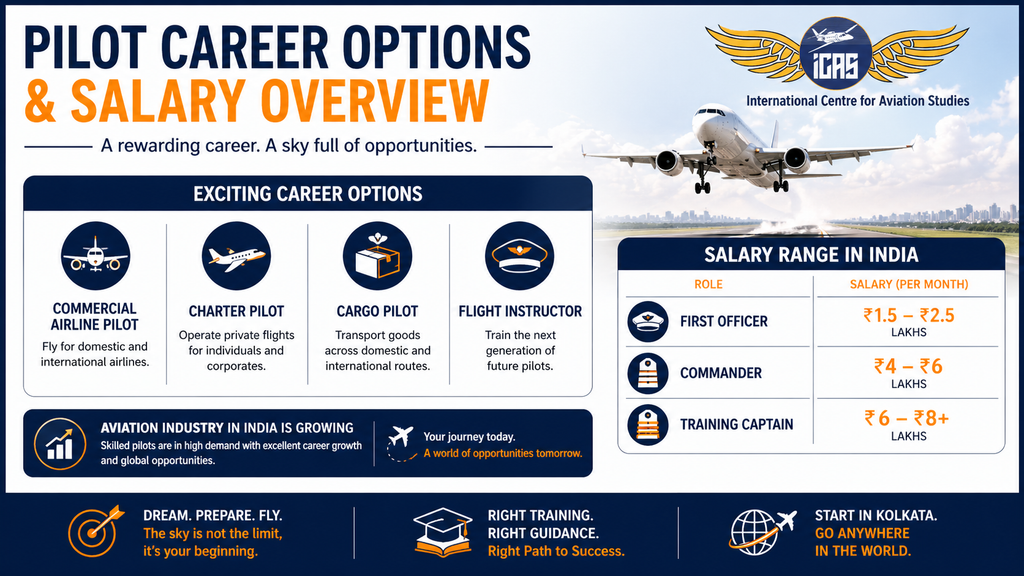
The aviation industry in India is growing rapidly, and trained pilots continue to be in demand.
Career Options
- Commercial Airline Pilot
- Charter Pilot
- Cargo Pilot
- Flight Instructor
Salary Range
| Role | Salary |
| First Officer | ₹1.5 – ₹2.5 Lakhs per month |
| Commander | ₹4 – ₹6 Lakhs per month |
| Training Captain | ₹6 – ₹8+ Lakhs per month |
Many pilots who begin their training in India go on to work with domestic and international airlines.cally and then move into national or international opportunities.
Pilot Training in India: What Actually Matters
When students search for pilot training in India or commercial pilot training in India, the focus is often only on flying schools.
However, your preparation before flying plays a major role in your success.
What You Should Focus On
Strong DGCA Preparation
Concept clarity helps you clear exams efficiently.
Structured Learning
A clear roadmap avoids confusion during training.
Mentorship
Guidance helps you make better decisions at each step.
Clarity Before Investment
Understanding the full process prevents costly mistakes.
Institutions like ICAS Academy focus on helping students prepare for DGCA exams while giving them clarity about the complete aviation pathway.
Flying simultaneously while studying can be fatigue-inducing and may affect learning efficiency.
Common Mistakes to Avoid
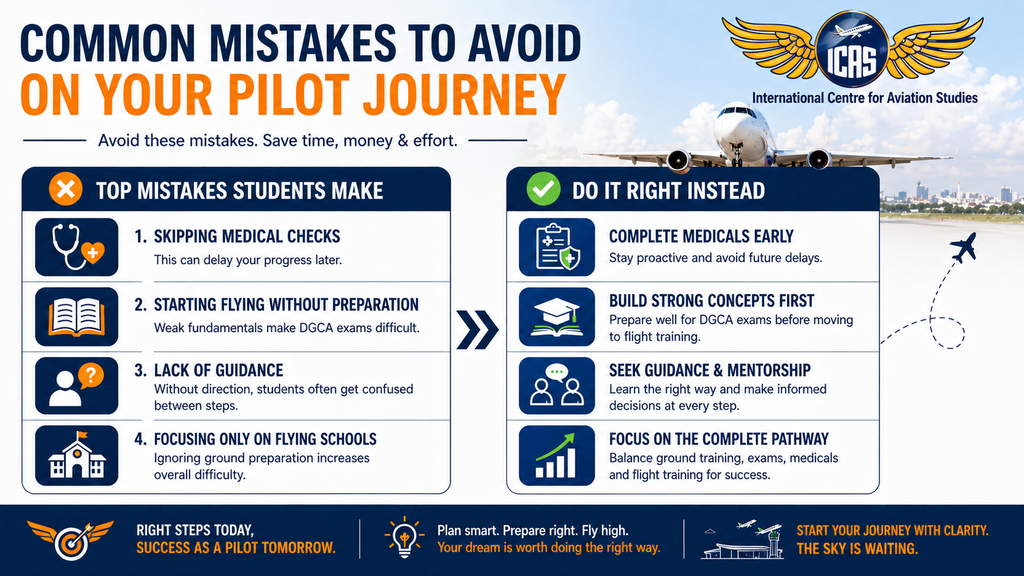
Skipping Medical Checks
This can delay your progress later.
Starting Flying Without Preparation
Weak fundamentals make DGCA exams difficult.
Lack of Guidance
Without direction, students often get confused between steps.
Focusing Only on Flying Schools
Ignoring ground preparation increases overall difficulty.
Frequently Asked Questions (FAQs)
How long does it take to become a pilot in India?
It usually takes around 18 to 24 months, depending on your progress and training schedule.
Are DGCA exams difficult?
DGCA exams are concept-based. With proper preparation and guidance, they can be cleared successfully.
Can I start pilot training after Class 12?
Yes, you can start pilot training after completing Class 12 with Physics, Chemistry, and Mathematics (PCM), provided you meet the required medical standards.
Final Thoughts
Becoming a pilot requires discipline, planning, and the right guidance.
For students across India, the opportunity is clear. The key is to start with a strong foundation, understand the process, and move step by step toward your aviation career.
Start Your Pilot Journey with the Right Foundation
Becoming a pilot requires the right start. Without proper guidance, students often waste time, attempt DGCA exams without clarity, or move into flight training unprepared.
At ICAS Academy, the focus is on building a strong foundation before you take the next step.
What You Get
- DGCA Ground School training covering Navigation, Meteorology, Air Regulations, and Technical subjects
- Clear guidance on the complete pilot pathway after Class 12
- Structured preparation strategy for DGCA exams
- Mentorship and regular doubt-solving support
- Additional hand-holding on medicals, documentation, and training decisions
Take the First Step
If you are serious about becoming a pilot, start with clarity instead of guesswork.
Apply for admission at ICAS Academy and begin your journey with proper guidance and a structured plan.