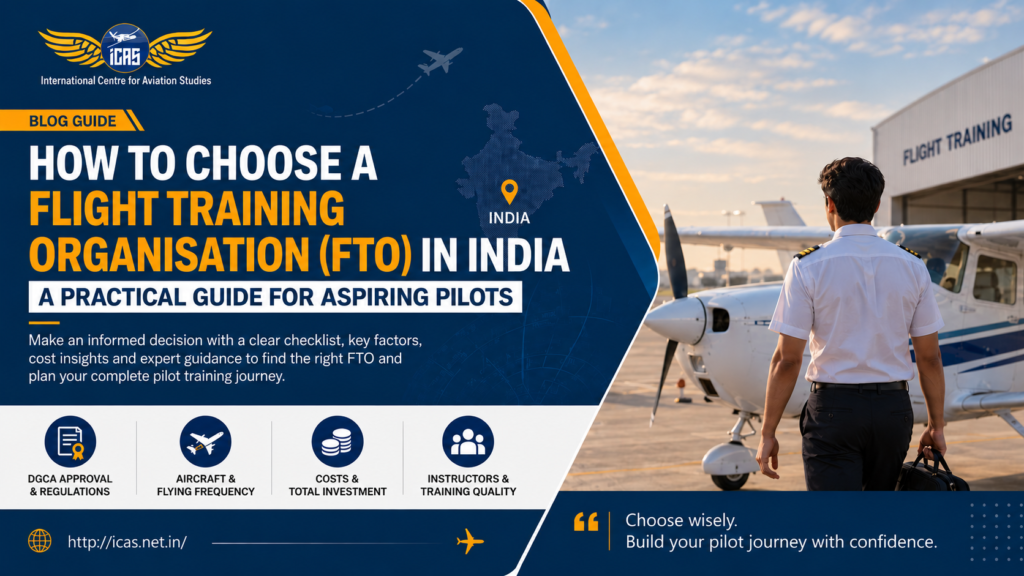
Choosing a Flight Training Organisation (FTO) is one of the biggest decisions an aspiring pilot will make. The right FTO can influence the quality of your flight training, how consistently you fly, how long your training takes and how effectively you progress towards your aviation career.
But choosing an FTO is only one part of the process. A professional pilot-training journey involves both theoretical knowledge and practical flying experience. This makes it important to consider how your ground school and flight training fit together.
For students completing their ground school through ICAS, the collaboration with BirdKanFly provides a pathway to continue their practical flight training with BirdKanFly. This can make the transition from classroom learning to flight training more convenient and create a more connected aviation-training journey.
If you are researching how to become a pilot in India, here are the key factors to consider before choosing your FTO.
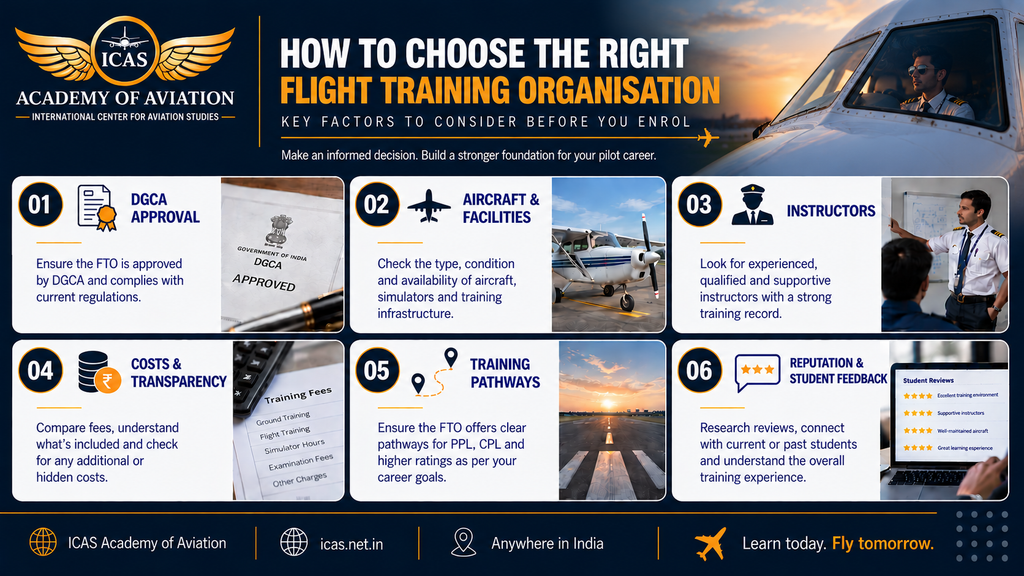
1. Check the FTO’s DGCA Approval
The first step in understanding how to choose a flight training organisation in India is verifying its regulatory status.
The Directorate General of Civil Aviation (DGCA) regulates civil aviation in India, including approved Flight Training Organisations. Before enrolling, students should verify the FTO’s current approval and ensure that the training they intend to undertake is covered by its authorisation.
DGCA also provides information that can help aspiring pilots evaluate and compare FTOs. However, regulatory status or ranking should not be the only consideration. The actual training environment and operational performance matter just as much.
2. Consider the Complete Pilot Training Journey
Pilot training does not begin when you first sit inside an aircraft.
Ground school provides the theoretical foundation for aviation, covering subjects such as navigation, meteorology, aviation regulations, aircraft systems and other areas required for pilot licensing. Flight training then allows students to apply this knowledge in practical situations.
For this reason, it is useful to think about ground school and flight training as connected stages rather than completely separate experiences.
Students can learn more about selecting the right DGCA ground school before moving into practical flight training.
For ICAS students, the collaboration with BirdKanFly creates an opportunity to follow this progression from ground school at ICAS to practical flight training under BirdKanFly.
3. Look Beyond the Advertised Aircraft Fleet
When comparing flight schools in India, do not simply count the number of aircraft shown on a website.
The more important question is: how many aircraft are actually available for students to fly?
Ask about:
- Number of operational aircraft
- Aircraft-to-student ratio
- Maintenance schedules
- Availability of flying slots
- Backup aircraft
- Average flying frequency
Regular flying is important for maintaining training momentum. A large advertised fleet does not necessarily mean students will receive frequent flying opportunities.
4. Evaluate Instructors and Training Quality
Your instructors have a direct influence on how you develop as a pilot.
Look at instructor experience, availability, student-to-instructor ratios and how the FTO monitors student progress.
Ground training should also receive careful attention. A strong theoretical foundation can make it easier for students to understand the principles behind their practical flying.
Students considering structured preparation can also explore self study vs pilot ground school options and understand how classroom-based preparation compares with self-study for DGCA examinations.
5. Ask How Frequently Students Fly
One of the most useful questions to ask an FTO is how often students actually fly.
The advertised duration of a CPL programme does not necessarily represent the time a student will take to complete training.
Ask:
- How many flights does a student typically receive each week?
- How are cancelled flights rescheduled?
- What happens when an aircraft is under maintenance?
- How does weather affect the schedule?
- What is the typical completion timeline?
Training continuity matters. Long gaps between flights can affect progress and make it harder for students to maintain consistency.
6. Understand the Complete Cost
When comparing FTOs, do not focus only on the advertised flight-training fee.
Your overall pilot-training investment may include:
- Ground school
- Flying hours
- Simulator training
- Examination and licensing expenses
- Additional flying hours
- Accommodation
- Transportation
- Training materials and equipment
- Administrative charges
Students should also understand pilot ground school fees in India when calculating the broader cost of their training.
The lowest initial package price does not always mean the lowest overall cost.
[INFOGRAPHIC 2: “WHAT DOES PILOT TRAINING COST?”]
Suggested infographic structure:
Total Training Investment
Ground School + Flight Training + Exams & Licensing + Accommodation + Transport + Additional Hours
7. Visit the FTO Before Enrolling
If possible, visit the FTO before making a financial commitment.
Look at the aircraft, classrooms, briefing rooms, simulator facilities and general training environment.
More importantly, speak to current students.
Ask them about aircraft availability, instructors, scheduling, maintenance delays, administration and their actual progress.
This can reveal the difference between what an FTO advertises and what students experience during day-to-day training.
8. Look for a Connected Training Pathway
Convenience in pilot training is not only about location or fees. It can also mean having a clear path from one stage of training to the next.
The ICAS and BirdKanFly collaboration is designed to provide students with such a pathway. Students completing their ground school classes through ICAS can then continue into flight training under BirdKanFly.
This allows students to approach their training as a more connected journey:
ICAS Ground School → Theoretical Preparation → BirdKanFly Flight Training → Practical Flying
Instead of independently navigating different providers for each stage, students have a clearer route from aviation theory towards practical flight training.
For students planning their Commercial Pilot Licence (CPL) training, this connected approach can make the overall training journey easier to understand and plan.
9. Watch for Red Flags
Be cautious if an FTO:
- Pressures you to make an immediate payment
- Has an unclear fee structure
- Promises unrealistically fast completion
- Guarantees airline employment
- Cannot clearly explain aircraft availability
- Provides limited information about its training process
- Avoids questions about maintenance or scheduling
A professional flight school should be transparent and willing to answer detailed questions before you enrol.
Choose the Right Training Pathway, Not Just an FTO
Knowing how to choose a flight training organisation in India means looking beyond advertisements and course fees. DGCA approval, aircraft availability, instructors, flying frequency, safety, facilities and total cost should all form part of your decision.
But aspiring pilots should also consider what happens before and after they enter the cockpit.
Ground school builds the theoretical foundation. Flight training develops practical flying skills. Having a clear connection between these stages can make the overall process easier to navigate.
For students choosing ICAS for ground school, the collaboration with BirdKanFly offers a convenient pathway to continue into practical flight training under BirdKanFly. This brings together the academic and practical sides of pilot training into a more comprehensive journey.
If you are planning your aviation career, you can also get in touch over WhatsApp to discuss and better understand the stages involved before making your training decisions.
Start Your Aviation Training With ICAS x BirdKanFly
If you are looking for a structured approach to DGCA ground preparation with the flexibility of online learning, ICAS offers online and offline ground-training options for aspiring pilots.
Explore the available ground-training programme and choose the learning format that fits your preparation needs.